

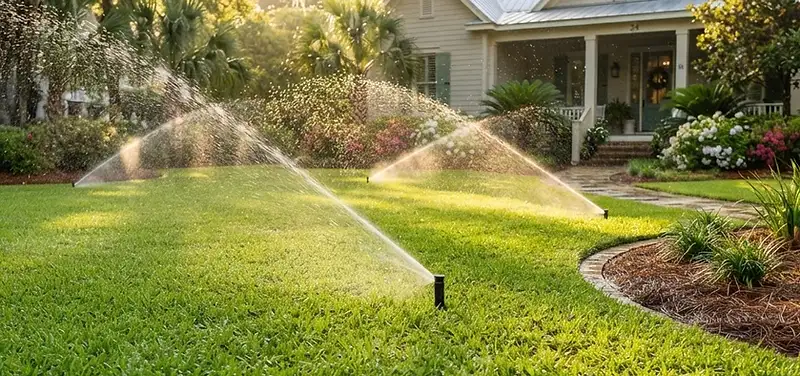
Lowcountry Lawn Watering Guide: How Often to Water
How often, how long, and when to water your lawn in the South Carolina Lowcountry.
This guide answers the question we hear most from homeowners across Summerville, North Charleston, Nexton, Summers Corner, Cane Bay, Mt. Pleasant, and the rest of the South Carolina Lowcountry: how often should you water your lawn, and how long should each zone actually run? The honest answer depends on your soil, your grass variety, the season, and how your irrigation system is designed — but there are reliable starting points that work well in our climate.
Use the schedule below to set a watering plan that keeps turf healthy, pushes roots deep, and keeps water bills predictable. You will also find the warning signs of overwatering and underwatering, and the reason so many Lowcountry watering problems turn out to be drainage problems instead.
How Often Should You Water Your Lawn in the Lowcountry?
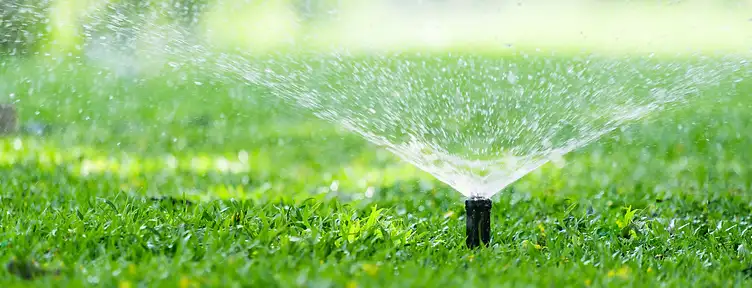
Water about 1 to 1.5 inches per week, delivered in two or three deep sessions instead of a daily sprinkle. Sandy Lowcountry topsoil drains quickly and holds less water than the clay soils of the upstate, so most established lawns do best watering two to three days a week in summer and one to two days a week in spring and fall, running each zone long enough to soak the soil four to six inches deep.
Measuring matters more than guessing. Set a few shallow cans or a rain gauge around a zone, run it, and time how long it takes to collect roughly half an inch. Multiply that run time by two or three watering days and you have a weekly total you can actually manage — and a way to spot coverage gaps where the cans stay nearly empty.
In short: 1 to 1.5 inches per week, two to three times a week, deeply enough to reach four to six inches of soil — and always adjusted for rainfall and the season.
Seasonal Watering Schedule for Lowcountry Lawns
Starting points for established warm-season turf on a typical coastal South Carolina lot.
| Season | How often | Typical run time | What to watch |
|---|---|---|---|
| Spring (March – May) | 1 – 2 days per week | 20 – 30 minutes per zone | Soil warms and demand climbs. After spring start-up, run each zone and check for winter damage, tilted heads, and dry spots. |
| Summer (June – August) | 2 – 3 days per week | 30 – 45 minutes per zone | Peak heat and afternoon thunderstorms. A rain sensor or weather-based controller keeps a storm from turning into a week of overwatering. |
| Fall (September – November) | 1 – 2 days per week | 20 – 30 minutes per zone | Cooler air cuts evaporation. Reduce run times gradually, and keep new sod or seed on its own establishment schedule. |
| Winter (December – February) | Rarely, only if needed | 10 – 15 minutes per zone | Dormant warm-season turf needs very little water. Water only during dry, warm spells and never right before a freeze. |
Soil type, sun exposure, grass variety, and sprinkler head spacing all shift these numbers. A property evaluation dials in exact run times and a zone-by-zone schedule for your system.
Why Deep, Infrequent Watering Beats a Daily Sprinkle
Watering a little bit every day trains a lawn to be fragile. Moisture never reaches far below the surface, so roots stay shallow and dry out within hours of the next hot afternoon. Shallow roots also mean a lawn that wilts fast in a July dry spell, stresses during establishment, and loses ground to weeds and disease. Deep watering does the opposite: it wets the full root zone, which pulls roots downward and builds a turf that holds up through heat, humidity, and the occasional week without rain.
The Lowercountry wrinkle is clay. Many coastal lots have sandy topsoil sitting over dense clay or hardpan that absorbs water slowly. If a zone runs long enough to satisfy the sand, water often sheeting off the clay and running down the street. The fix is cycle-and-soak: split a zone into two shorter runs about an hour apart, so the first pass softens the soil and the second soaks in instead of running off.

Signs Your Lawn Is Getting Too Little — or Too Much — Water
Too little water
- Brown or dry patches that follow sprinkler head spacing
- Footprints and mower tracks that stay visible for hours
- Blades that curl, fold, or crunch underfoot late in the day
- Soil that is dry two inches down when you probe with a screwdriver
- Dry spots on sunny slopes while shaded areas stay green
Too much water
- Soggy spots, squishy soil, or standing water after a storm
- Yellowing in low areas while higher ground looks healthy
- Mushrooms, algae, or a slimy film on the soil surface
- Dollar spot and other fungal disease during humid stretches
- Water running off the lawn into the street or driveway
- A water bill that climbs while the lawn does not improve
Soil, Rainfall, and Drainage: The Lowcountry Wildcards
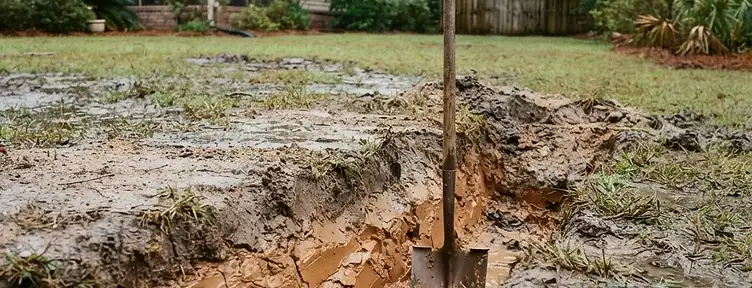
The Lowcountry receives more than 50 inches of rain in a typical year, with much of it arriving in intense summer thunderstorms. Flat lots, sandy topsoil over heavy clay, and grading that is still settling in newer neighborhoods all conspire to send water exactly where you do not want it. When a lawn stays wet no matter how you adjust the controller, the problem is usually not watering at all — it is where the water goes after it lands.
That is why we evaluate irrigation and drainage together. If a yard has low spots that hold water, adding more sprinkler run time makes it worse, not better. Correcting grading, adding a French drain or surface drainage, and re-tuning the irrigation zones to match sun and soil solves the root cause. Our Lowcountry drainage guide walks through the warning signs in more detail.

Dialing In Watering With a Smart Irrigation System
The easiest lawn to water correctly is one with a system designed for it. A weather-based or soil-moisture controller adjusts run times automatically as temperatures and rainfall change, so you are not reprogramming a clock every month. Hydrozoning groups heads by sunlight and water need, so full-sun turf and shady beds each get what they require instead of sharing one compromise schedule.
Matched precipitation nozzles, pressure regulation, and correct head spacing eliminate the dry corners and soggy strips that lead homeowners to overwater the whole yard to fix one bad zone. Combine that with a rain sensor, a monthly walk-through to check for tilted or clogged heads, and a seasonal adjustment in spring and fall, and your lawn gets the right amount of water without the guesswork. If your existing system sprays unevenly or has zones that never seem to match, irrigation repair and maintenance or a new irrigation installation will fix the source of the problem.
Five-minute watering checklist
- Measure each zone with cans and note the run time for half an inch.
- Set a rain sensor or weather-based schedule so storms pause the system.
- Water before 10 a.m. so blades dry during the day.
- Cycle and soak on clay soils instead of one long run.
- Walk the zones monthly and reset any head that is tilted or buried.
Lowcountry Watering Questions, Answered
Answers to the questions we hear most from Lowcountry homeowners.
Most established Lowcountry lawns need about 1 to 1.5 inches of water per week, delivered in two or three deep sessions rather than a daily sprinkle. Our sandy coastal soils drain quickly and hold less water, so most yards do best watering two to three days a week in summer and one to two days a week in spring and fall, with each zone running long enough to soak the soil four to six inches deep.
Keep Learning, or Get It Handled
Guides and services that pair with a good watering schedule.

Lawn Care Guide
Seasonal care for Lowcountry lawns, from spring start-up to winter protection.
View page
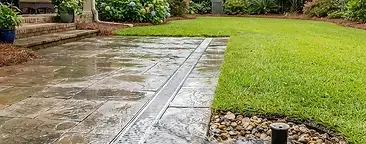
Drainage Guide
Why some yards stay wet, and the drainage solutions that fix them.
View page
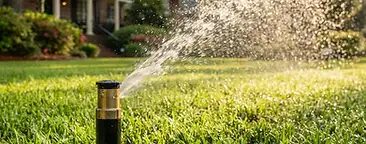
Irrigation Installation
Hydrozoned, weather-based systems designed for Lowcountry soil and sun.
View page
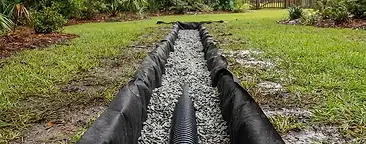
French Drain Installation
Subsurface drainage that moves trapped water away from lawns and foundations.
View pageWant a Watering Schedule You Can Trust?
Back Tees designs, installs, and tunes irrigation systems across the South Carolina Lowcountry. Request an estimate and we'll build a schedule around your soil, sun, and turf.